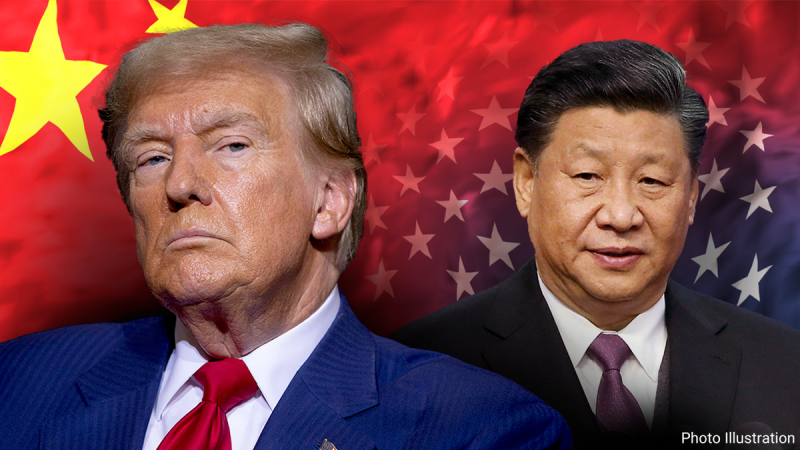
The United States and China recently announced a significant easing of tariffs, with both countries agreeing to reduce duties for a 90-day window. The financial press lauded the move. Stocks rallied. Headlines proclaimed relief in a trade war that has dragged on and weighed heavily on global markets. But while most fixated on the immediate impact of slashed tariffs, the more meaningful development went largely unnoticed.
Quietly, Washington and Beijing agreed to establish a formal ‘trade consultation mechanism,’ a permanent bilateral platform to hold structured talks on currency policies, market access, and non-tariff barriers. While bureaucratic in tone, this institutional move may prove to be the most consequential economic shift in years.
That’s because this isn’t just about trade logistics—it’s about the foundation of the global economic system. The U.S.–China imbalance isn’t simply a matter of bad trade deals or American overconsumption. It’s a structural problem embedded in the international monetary framework, and for the first time in a generation, both countries appear ready to talk about it seriously.
This deeper imbalance is something Stephen Miran—who now serves as chair of the President’s Council of Economic Advisers—laid out in extraordinary detail in a 41-page report published in November 2024. Titled ‘A User’s Guide to Restructuring the Global Trading System,’ the paper explains how the current dollar-centric model locks the United States into persistent trade deficits while encouraging surplus economies like China to underconsume and overproduce. These excess savings are then recycled into U.S. financial assets, particularly Treasuries, which props up the dollar and erodes American manufacturing.
The result? A lopsided economic order where the U.S. acts as consumer of last resort and global debtor-in-chief, while countries like China flood the world with goods but face chronic domestic stagnation.
Miran calls this a ‘Triffin World,’ referencing economist Robert Triffin’s famous dilemma: When a national currency is also a global reserve, it eventually becomes impossible to balance domestic and international obligations. To satisfy global demand for safe assets, the U.S. must run deficits, which hollow out its own economy. Meanwhile, surplus nations avoid necessary reforms at home because the system rewards their export-heavy models.
China’s property crisis and slowing growth show the limits of its export model. The U.S., meanwhile, faces mounting deficits, political polarization, and industrial decline. Neither side can afford to ignore the systemic flaws any longer.
In theory, tariffs are a way to push back against this imbalance. But they’re crude and often counterproductive. What Miran proposes is a structural recalibration—realigning currency values to reflect underlying economic conditions, discouraging excessive reserve accumulation, and encouraging more balanced capital flows.
The fact that this new U.S.–China mechanism explicitly includes discussions on currency and non-tariff measures suggests that Miran’s framework is already influencing policy. This is more than a détente—it’s the first real move to unwind Bretton Woods II.
It’s also important to understand what happens when imbalances like these are allowed to persist. History shows that unresolved economic distortions tend to escalate into geopolitical conflict. In the interwar period, the failure to manage reparations and trade balances led to a deflationary spiral in Europe. Germany’s economy collapsed under the weight of austerity and fixed exchange rates, leading to widespread unemployment, social unrest, and ultimately, war.
We’re not there yet—but the warning signs are clear. China’s property crisis and slowing growth show the limits of its export model. The U.S., meanwhile, faces mounting deficits, political polarization, and industrial decline. Neither side can afford to ignore the systemic flaws any longer.
That’s why the new committee matters. For the first time, Washington and Beijing are signaling a willingness to move beyond tactical measures and engage in structural dialogue. It may not grab headlines, but for those paying attention, it’s a major pivot.
Critics will say that this is just another diplomatic forum. But there’s reason to believe it’s more. Miran’s appointment to the top economic advisory post in the White House indicates that these ideas have currency at the highest levels. And the alignment between his policy prescriptions and the scope of the new committee is hard to ignore.
To be clear, none of this will be easy. The system didn’t get here overnight, and it won’t be unwound quickly. But the creation of this platform is a start. It acknowledges the real root of global trade tensions, not as a battle between exporters and importers, but as a distortion of incentives baked into the architecture of international finance.
The United States must seize this opportunity. Rather than settling for symbolic tariff victories or short-term market gains, we should push for a durable framework that restores balance, rewards production at home, and disincentivizes dependency abroad.
In that sense, this may be one of the clearest examples of President Trump’s ‘Art of the Deal’ approach—firm on leverage, clear-eyed on outcomes, and willing to tackle problems at the root rather than the surface.
So, while the tariff cut got the headlines, the real story lies in this committee—a forum that could, if used wisely, become the place where the next phase of global economic order is quietly drafted.
In the end, America cannot remain strong abroad if it’s structurally weakened at home. This agreement gives us a chance to begin rewriting that script.
And that’s a deal worth making.